Menu
Patio Resurfacing & Repairs: When Is It Better Than Replacing?
Concrete Patio McAllen
Homeowners all over McAllen will have many decisions on what to do with their concrete patios once they start showing wear, crack or damage to the surface. Instead of choosing to replace it immediately, homeowners can be educated on when resurfacing is a better option for them. Resurfacing can allow homeowners to spend less money and extend the life of their patio by several years. Properties such as those located near the International Museum of Arts and Science and/or the McAllen Nature Center area are excellent candidates for strategically placed resurfacing methods, which address surface problems without disrupting or costing you a fortune to replace the entire patio. Understanding your patio’s current condition and the options available to repair your patio is the first step to determining if resurfacing is an option for you in our Rio Grande Valley climate.

Assessing Your Concrete Patio’s Current Condition
The first step toward reaching a repair decision is to thoroughly evaluate the present state of your existing concrete patio surface. Replacing the concrete is advisable when the cracks need more than 2 inches of material to repair; however, if the cracks are visible, and the slab remains structurally intact, then resurfacing will help restore both function and appearance.
Minor cracking, staining, spalling, or general wear on the surface level of your patio usually makes a good candidate for resurfacing. More serious structural problems, which include major settling, deep cracks extending all the way through the entire slab, and/or significant heaving, require more extensive and costly solutions. A professional assessment becomes necessary when the severity of the problem(s) appears to fall somewhere between repair and replacement options.
Indicators That Suggest Resurfacing Is an Ideal Option for Your Concrete Patio Restoration
There are several signs that suggest that resurfacing will be the best option for restoring your concrete patio. Resurfacing can successfully treat cosmetic damage such as surface stains from outdoor furniture, minor hairline cracks, or discoloration. Because they tend to receive so much heavy usage and exposure to the elements, the patios in the vicinity of the McAllen Convention Center frequently suffer from cosmetic damage and other types of damage that lend themselves well to surface renewal.
In addition, patios that have uneven surfaces resulting from minor settling or slight slope irregularities can also be addressed via the application of an overlay system. The existing concrete serves as a solid base for the overlay, while the new surface layer will solve aesthetic and minor functional problems.
Understanding Various Types of Resurfacing Options
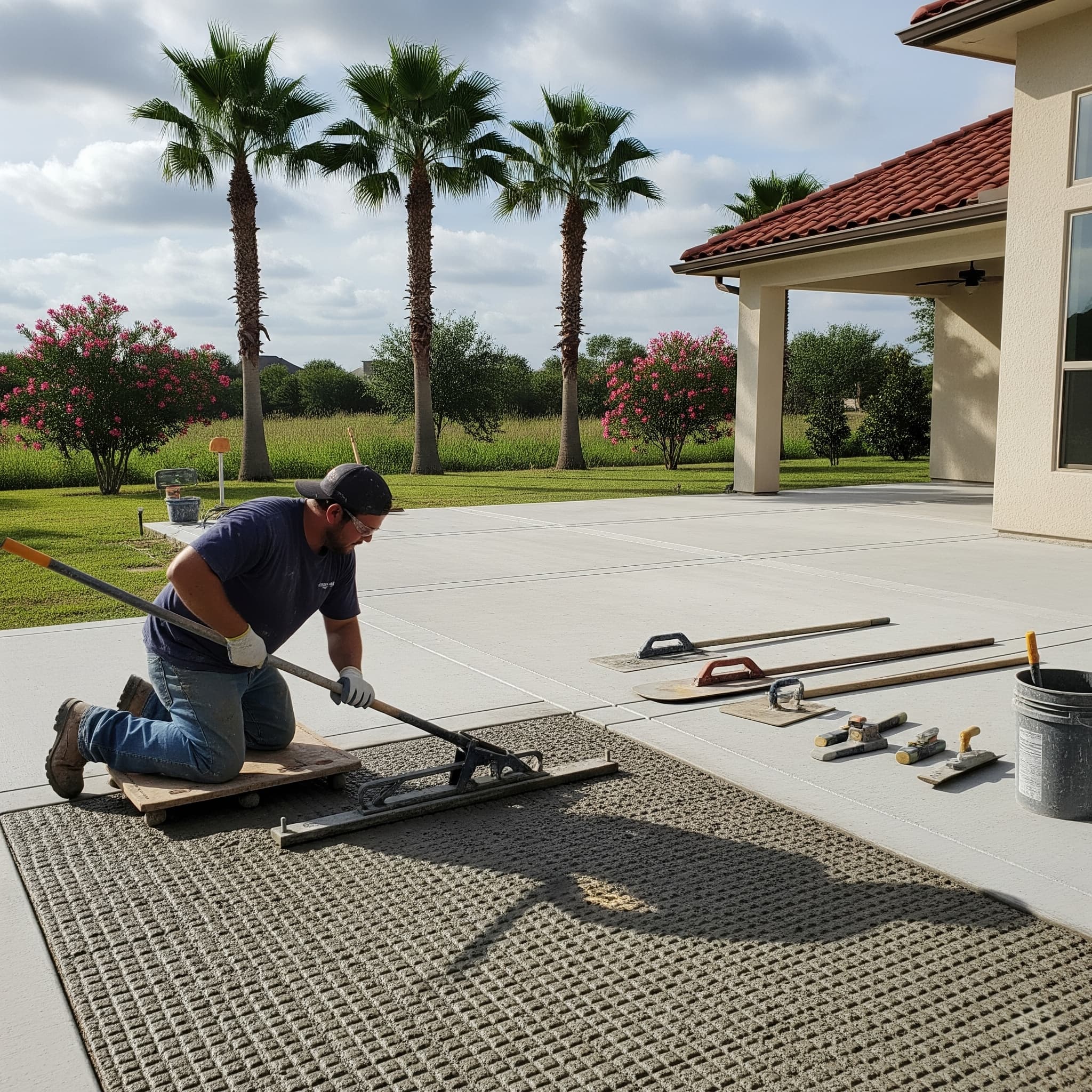
Modern concrete patio resurfacing incorporates a variety of different methods and materials to address a wide variety of problems and improve durability and appearance. Concrete resurfacing refers to the process of applying a new layer of material over the top of the existing concrete surface to restore its appearance, enhance its durability, and lengthen its lifespan. There are a variety of different options available for resurfacing, ranging from simple repair compounds to decorative overlay systems that will totally transform your outdoor space.
Concrete overlay systems are perhaps the most versatile type of resurfacing option, as they enable you to customize the color, texture, and pattern of your new surface layer while also improving the structural integrity of your existing patio surface. Concrete overlay systems typically range in thickness from 1/8 inch to several inches, depending upon the particular needs and conditions of your patio.
Benefits of Decorative Overlay Systems
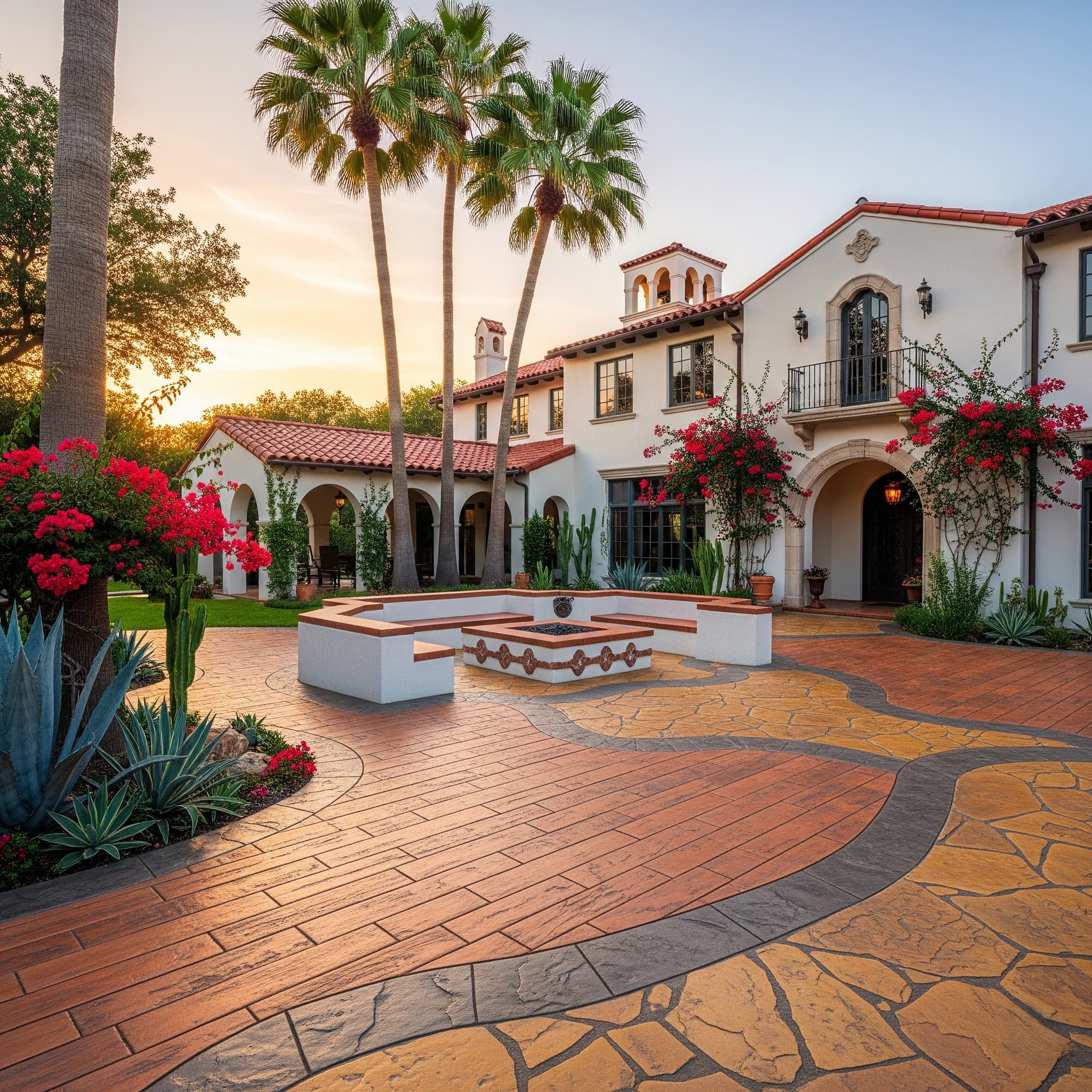
Decorative overlay systems not only add color, pattern, and texture to your patio, but they also significantly improve the durability and strength of the surface layer of your patio. They can mimic the look of natural stone, brick, tile, or virtually any custom design while providing superior weather protection compared to many original concrete installations. Landscaping and architectural features of properties located in the Quinta Mazatlan area often match up well with decorative overlay systems.
Thin Micro-Topping Applications Create Smooth Finishes
Thin micro-topping applications create smooth, even finishes that are perfect for modern designs. Thin micro-topping applications adhere well and create seamless surfaces that are easier to keep clean and maintain than traditional concrete textures.
Cost Comparison: Resurfacing Compared to Full Replacement of the Patio
Cost is often the deciding factor when considering whether to resurface or replace your patio. In general, resurfacing will be 30-50 percent less expensive than full patio replacement. The cost savings associated with resurfacing your patio will begin with lower costs associated with installing the resurfacing system (versus razing and removing your patio), lower labor costs associated with the resurfacing process (compared to full replacement), and no costs associated with disposing of the debris from the removed patio.
Full patio replacement involves additional costs, including razing, removal, preparing a new base, and potentially restoring landscaping. Replacement costs can be higher when the scope of the job includes obtaining permits, relocating utilities, and performing site preparation.
Timeframe for Project Completion and Potential Disruptions to Daily Life
Resurfacing projects are generally completed in a matter of a few days (typically 1-5 days). While this timeframe is generally faster than that of full replacement (which can take anywhere from 1 week to a month or longer), the timeframe does vary based on the size of the area being resurfaced, as well as the type of products used. Additionally, resurfacing projects generally require far less disruption to your daily routine than full replacement projects, which can result in weeks of noise, traffic congestion, and other disruptions to your home life.
Regardless of the size of the area being resurfaced, weather conditions can affect the timeframe of your project, as prolonged periods of rain or extreme temperatures can slow down or stop the resurfacing process entirely. For example, because McAllen has a relatively mild climate, resurfacing projects can be started and completed throughout the year with fewer interruptions from inclement weather.
Conditions Where Replacement May Be a Better Option
While resurfacing offers many benefits, there are some conditions under which replacement may be a more cost-effective and practical alternative. Major structural problems, such as deep structural cracks, significant settling, and/or foundation problems, require that the underlying structural problems be resolved before resurfacing. Concrete replacement is generally preferred for older (i.e., at least 20 years old) concrete surfaces that have previously received resurfacing and/or patching.
Furthermore, concrete surfaces that have more than 40% of the total surface damaged may benefit more from a complete replacement versus continued patching and resurfacing. Additionally, properties that plan on making significant changes to their landscaping and/or performing utility installs may find that the timing of replacement allows for the coordination of multiple jobs at once.
Considerations Based Upon the Age of the Patio and Past Repairs
Older concrete patios that have received multiple repair attempts may not have enough structural integrity to effectively support overlay systems. As a result, if your patio has been previously resurfaced and is again experiencing problems, replacement may be a more viable long-term solution and provide better performance.
Structural problems, which include underlying drainage problems, poor original construction, and/or soil movement problems, require resolution before any successful surface treatments can be achieved. Therefore, a professional assessment will help identify any deeper structural problems that surface treatments cannot address.
Environmental Factors to Consider Based Upon Climate and Location in McAllen
McAllen’s subtropical climate creates unique challenges and advantages for both resurfacing and replacement decisions. While high humidity levels and occasional heavy rainfall necessitate careful scheduling of concrete work, the generally mild temperatures found in McAllen allow for year-round installation of most overlay systems. These environmental factors often favor resurfacing projects that can be completed during optimal weather windows.
The clay-rich soils that exist throughout the Rio Grande Valley cause minor shifts in the patio surface. While these surface shifts do not generally affect the structural integrity of the patio surface, resurfacing can generally address the aesthetic problems created by these shifts and monitor for any progression of the underlying movements.
Selecting Appropriate Materials for the McAllen Environment
To ensure maximum performance and longevity of your resurfacing project, selecting the right materials for the McAllen environment is vital. Modern polymer-modified overlays exhibit improved resistance to moisture penetration and thermal cycling than traditional concrete, and therefore are suitable for the climate conditions prevalent in McAllen. UV-resistant coloring systems also provide a means to maintain the appearance of your newly resurfaced patio, regardless of the intensity of the Texas sun.
Appropriate Surface Preparation and Curing Are Critical in High-Humidity Environments
Proper surface preparation and curing are particularly important in high-humidity climates, such as those found in McAllen, where moisture control directly affects the final adhesion and durability of overlay systems.
Choosing the Best Course of Action for Your Property
Ultimately, choosing whether to resurface or replace your patio is dependent upon your individual circumstances, including the current condition of your patio, budgetary constraints, the amount of time you have available for the project, and your long-term objectives for your property. Properly prepared and properly applied concrete resurfacing can last anywhere from 10 to 15 years, and provide exceptional value to owners who have a patio with sound structural integrity, but whose patio exhibits cosmetic or minor functional problems.
A proper assessment of your options is provided by experienced contractors familiar with the local climate conditions. Although many seemingly complicated problems have relatively straightforward resurfacing solutions, some problems require more comprehensive approaches to achieve lasting success.
Whether your objective is to restore your concrete patio to a beautiful and functional condition, understanding the differences between surface and structural problems will guide your wise investment decisions. Whether through strategic resurfacing or a full replacement, expert professionals, like us at McAllen Concrete Contractors, provide the knowledge and experience to help you determine the most appropriate course of action for your outdoor living space, and our blog provides additional information and resources to assist you in making informed decisions regarding your outdoor investment.
LATEST POSTS