Menu
McAllen Commercial Concrete Flatwork: ADA Compliance & Safety
Commercial Concrete McAllen
Businesses in McAllen need commercial concrete flatwork that is installed with ADA compliance to protect employees and customers, and to provide a safe, long-lasting surface. The best way to ensure that your commercial flat work meets the ADA compliance requirements is to hire an expert to do it right from the start of design through completion and final inspection, so you can avoid expensive fines and create a welcoming environment for everyone. With this knowledge of the Federal ADA laws and the local construction codes will help the business owner decide what type of concrete flat work they want to install on their property. Installing commercial concrete flat work for a customer at the McAllen Convention Center or installing commercial concrete flat work in the Rio Grande Valley will be the foundation of making a business operation accessible, safe, and compliant. By hiring an experienced contractor to install your commercial concrete flat work, you will be assured that the project will be completed in accordance with all safety codes and will provide a surface that will last in the harshest commercial applications.
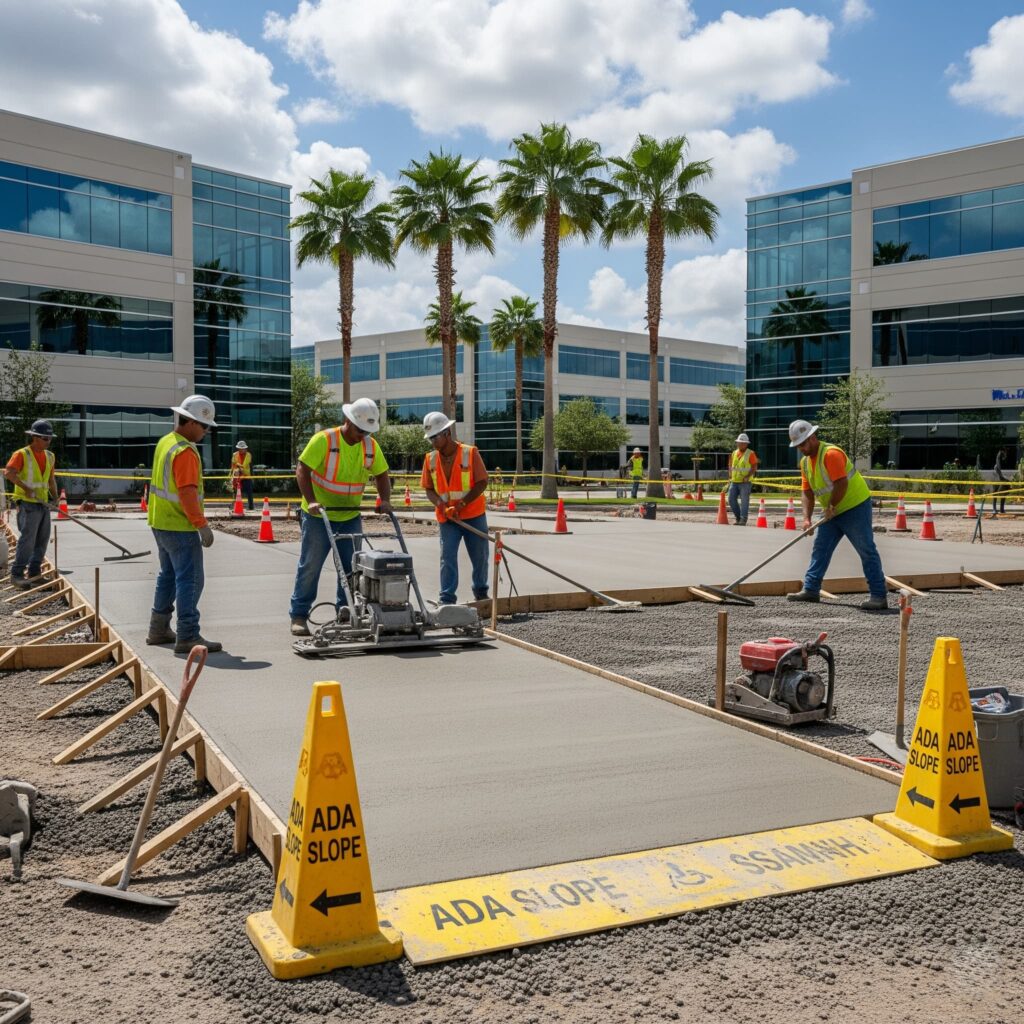
ADA Accessibility Requirements for Commercial Flooring
Under the Americans with Disabilities Act (ADA) of 1990, commercial floors are expected to adhere to certain accessibility standards to ensure that those with disabilities have equal access to the area. The ADA standards for commercial flooring indicate that the floor surface should be solid, firm, and non-slippery so as to safely navigate a commercial establishment by wheelchair, mobility aid, or other assistive device.
Flooring Surface Requirements
- Commercial floors need to be able to support loads and maintain a consistent grade and texture.
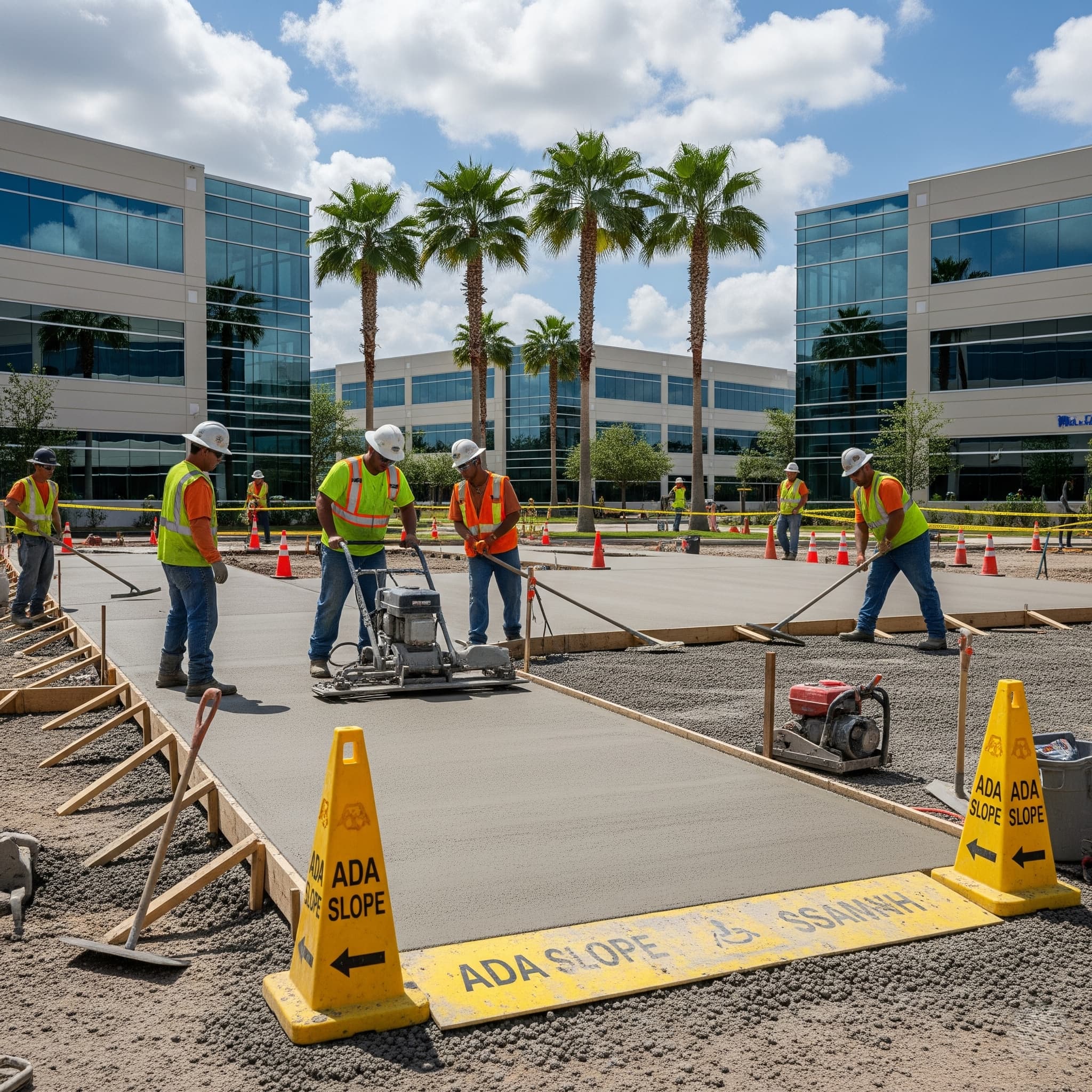
- Flooring must meet the 1:20 (5%) maximum allowable slope gradient for accessible route width requirements and no greater than 1:50 (2%) maximum allowable cross-slope for wheelchair-accessible routes to avoid drainage issues and allow for wheelchair access.
- The minimum clear path requirement is 36 inches wide for an accessible route, 42 inches wide around obstructions, and 48 inches wide at each turn.
Slip Resistance and Texture
- Surface finish must be slippery enough to accommodate wheelchair use but not so slippery that it will cause accidents.
- Certain specialized finishes, such as controlled brooming, light sandblasting, and chemicals applied to improve traction, provide a good balance between slip-resistance and wheelchair usability.
Friction Coefficients
- There are no specific friction coefficient standards in ADA guidelines; however, most commonly acceptable static friction coefficients for commercial flooring are .5 for dry conditions and .42 for wet conditions to accommodate wheelchair and foot traffic.
Flatwork Installation Process
- Concrete flatwork begins with an initial site assessment to determine accurate grades and drainage systems for the site.
- Laser leveling to achieve even slopes and grades to meet ADA requirements while allowing for drainage.
- Proper subgrade preparation to ensure a stable and durable finished surface.
- Quality control measures to achieve uniform density and moisture levels before placing the concrete.
- Placement of reinforcing steel, such as rebar or mesh systems, to add stability to the slab while minimizing cracking, which creates tripping hazards and accessibility barriers.
- Adequate concrete cover and proper reinforcement placement to ensure optimal performance of the slab.
Testing and Quality Assurance
- Rigorous testing of the concrete, including slump tests, air content testing, and strength testing via cylinder sampling, to ensure that the concrete meets the requirements of the specifications and regulatory standards.
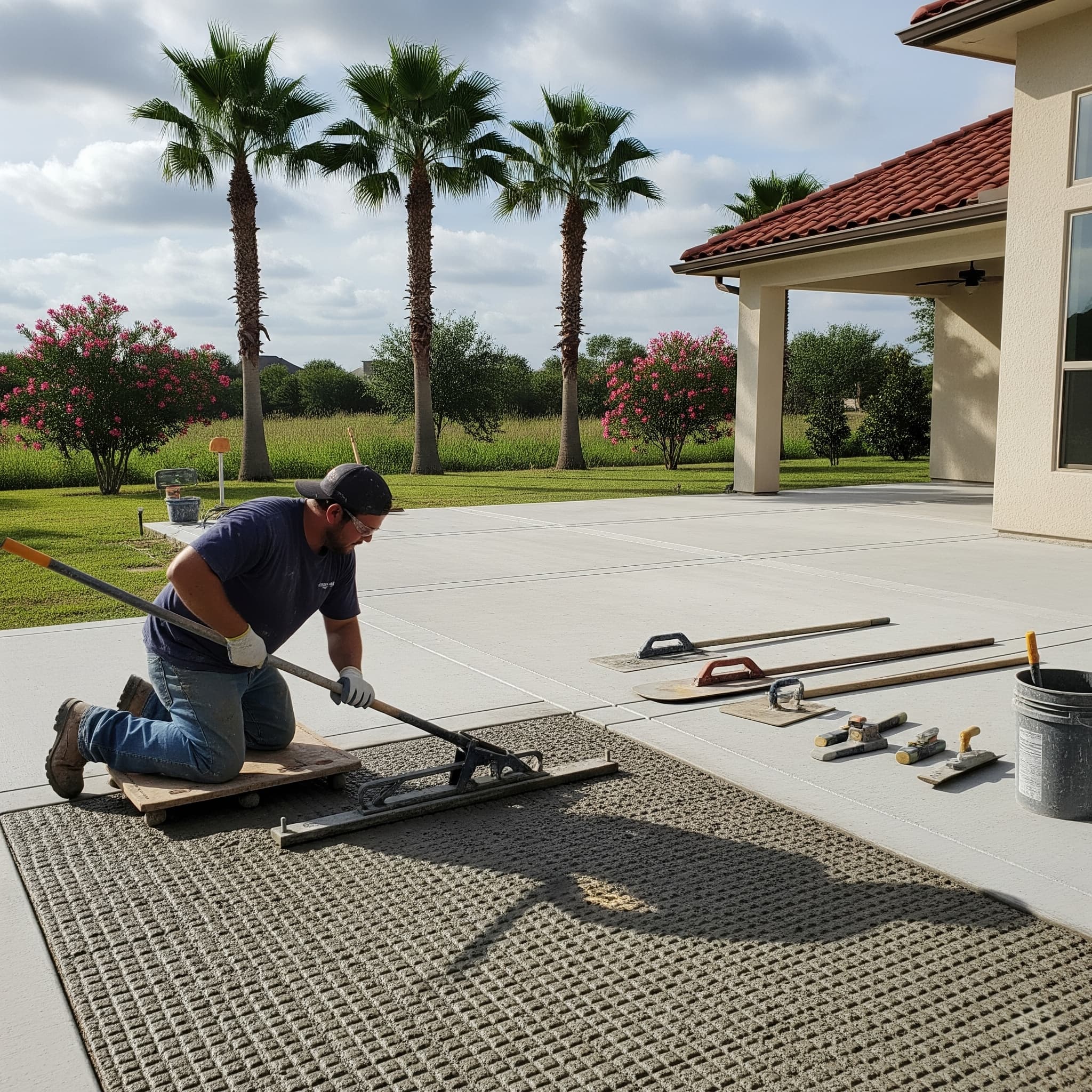
- Surface finishes utilizing specialized equipment and techniques, including power floats, trowels, and specialized texturing tools, to produce consistent and compliant surfaces.
- Timing and technique are crucial to developing the desired texture, flatness, and durability.
Accessibility Features and Design Elements
- Design features of accessible concrete construction that contribute to safe and successful navigation by individuals with disabilities include curb cuts, ramps, and transition zones.
- Precise construction of these elements is critical to meet the required slope of the transition zone while providing a smooth and stable connection between different elevations of the surface.
- Tactile warning surfaces located in designated areas provide visual cues to the visually impaired of possible hazards, including drop-offs, intersections, platforms, etc.
- Truncated domes are the recommended tactile pattern to be used for these warning surfaces and must be installed in accordance with the specific dimensions and contrast requirements outlined in the ADA standards.
- Drainage systems must be integrated into the design to prevent water accumulation on the surface of the concrete, which would create accessibility and/or safety hazards.
- Gentle slopes, strategically placed drains, and suitable gratings are incorporated into the design to accommodate mobility aids while preventing water collection.
Maintenance Access – Joints and Expansion
- Proper spacing and design of control joints to prevent cracking of the slab while creating smooth transitions for wheelchair users.
- Use of proper sealant to fill joints and keep them flush with the adjacent concrete surfaces.
- Expansion joints are included at building interfaces and between different segments of the concrete to accommodate thermal expansion without creating accessibility barriers.
- Specialized materials and techniques are utilized in the installation of these joints to maintain compliance throughout temperature fluctuations.
Worker Safety and Insurance
- Comprehensive safety program for protecting workers while ensuring productive and quality installation processes.
- OSHA regulations govern all aspects of concrete construction, including fall protection, respiratory protection, chemical exposure, and others.
- Personal protective equipment (PPE) is provided to the workers to minimize injury during the installation process, including PPE for feet, hands, eyes, etc.
- Ongoing worker safety training is conducted to address hazards common to commercial flatwork operations.
Traffic Management and Site Security
- Temporary barriers, warning signs, and coordination with local authorities are implemented to protect both workers and the public during the construction activity.
- Site security and traffic management practices are designed to promote safe operations in busy commercial areas throughout the City of McAllen.
Materials and Specifications
- High-performance materials are selected for commercial concrete applications to meet the demanding durability and performance requirements.
- Materials are carefully selected based on the properties needed for each application to ensure that the materials chosen will perform as expected and meet the required standards.
- Air-entrainment systems are used to protect concrete from freeze-thaw damage while maintaining a stable, firm surface that meets ADA compliance standards.
- Chemical admixtures, including water reducers and set control agents, enable contractors to optimize their placement and finishing processes.
- Fiber-reinforced polymers (FRPs) are added to commercial concrete applications to increase crack control and impact resistance in high-traffic commercial environments.
- These FRPs provide an additional layer of protection against surface defects that could compromise accessibility and/or create maintenance concerns.
Climate and Environmental Considerations
- The humid subtropical climate of McAllen impacts the placement, curing, and durability characteristics of the concrete in the field.
- UV-resistant coatings and surface treatments are used to protect decorative elements while maintaining slip resistance and compliance with accessibility standards.
- Maintenance scheduling is performed to maintain the appearance and performance of the concrete while preventing degradation that could result in compliance issues.
Inspections and Compliance Verification
- Compliance verification with ADA standards and local building codes is verified through inspections of the project at various stages, including:
- Subgrade preparation
- Steel placement
- Final concrete finishing
- Final inspection
- Documented records of materials, installation methods, and testing results are maintained for owner reference purposes to satisfy legal requirements and possible insurance/liability implications.
- Additionally, third-party accessibility consultants may conduct compliance verification of complex commercial projects. These consultants understand the nuances of ADA standards and can identify potential compliance issues early in the project before becoming expensive fixes.
Maintenance and Performance
- Properly installed commercial concrete has very few maintenance needs while providing decades of reliable, compliant service.
- Regularly scheduled inspections will detect any potential issues before they create accessibility or safety hazards.
- Preventative maintenance, including joint sealing, surface cleaning, and minor repairs, will help extend the service life of the concrete while maintaining compliance.
- Professional contractors will provide maintenance guidance and recommendations specific to commercial applications and local climate conditions.
Regulatory Changes and Future Compliance Needs
- As commercial accessibility standards continue to evolve, existing surfaces may require reevaluation against new requirements.
- Professional contractors will remain informed of changes in accessibility standards and provide recommendations for modification or improvement of existing surfaces.
Value and Cost Considerations
- Investment in professional commercial concrete installation provides long-term value through lower maintenance costs, longer service life, and protection of compliance.
- Installation errors can lead to costly violations and potential lawsuits while creating a poor customer experience.
- Increasingly, insurance companies consider accessibility compliance when determining policy coverage and premiums for businesses.
- Increased property values resulting from professional concrete improvements appeal to potential customers/tenants who value accessibility and compliance.
Benefits of Professional Installation
- Professionals have extensive knowledge of ADA requirements, local building codes, and performance expectations in the commercial market of McAllen.
- Professional contractors are experienced in the complex relationships between ADA standards, local building codes, and practical performance requirements.
- Specialized equipment and techniques are available to professionals to produce superior results compared to DIY efforts.
- Our team is knowledgeable of commercial concrete services and accessibility standards to create safe and functional commercial spaces that serve the diverse needs of your customers and community.
McAllen Concrete Contractors combines technical expertise with a deep understanding of accessibility requirements to deliver commercial concrete solutions that protect your business while serving your community’s diverse needs.
LATEST POSTS